When I moved into my current apartment, the kitchen had a glass top stove. I already owned a Lodge 10.25-inch skillet that I'd been cooking with for about a year on a gas range. First time I slid it across the glass to adjust positioning (instinct from gas cooking) and I heard that grinding noise and my stomach dropped. I lifted the pan and found a faint scratch running about three inches across the cooktop surface.
That moment kicked off six months of figuring out whether cast iron and glass top stoves can actually coexist, or if I needed to give up on cast iron entirely. Spoiler: they can coexist. The best cast iron skillet for a glass top stove is the Stargazer 10.5-Inch, which has a machined smooth bottom that will not scratch glass. If budget is tight, sanding the bottom of a standard Lodge works too. Either way, the critical rule is: always lift, never slide. Here's what I learned after six months with both approaches.
The Two Approaches
After that first scratch, I researched obsessively. The advice split into two camps:
Camp 1: Sand your existing pan. Take 80-grit sandpaper to the bottom of a standard Lodge, smooth out the casting texture, and you've got a glass-safe skillet for free. Plenty of people swear by this.
Camp 2: Buy a smooth-bottom skillet. Spend more upfront on a pan that's machined or polished smooth from the factory. No DIY, no compromise on the finish quality.
I tried both. Here's what I found.
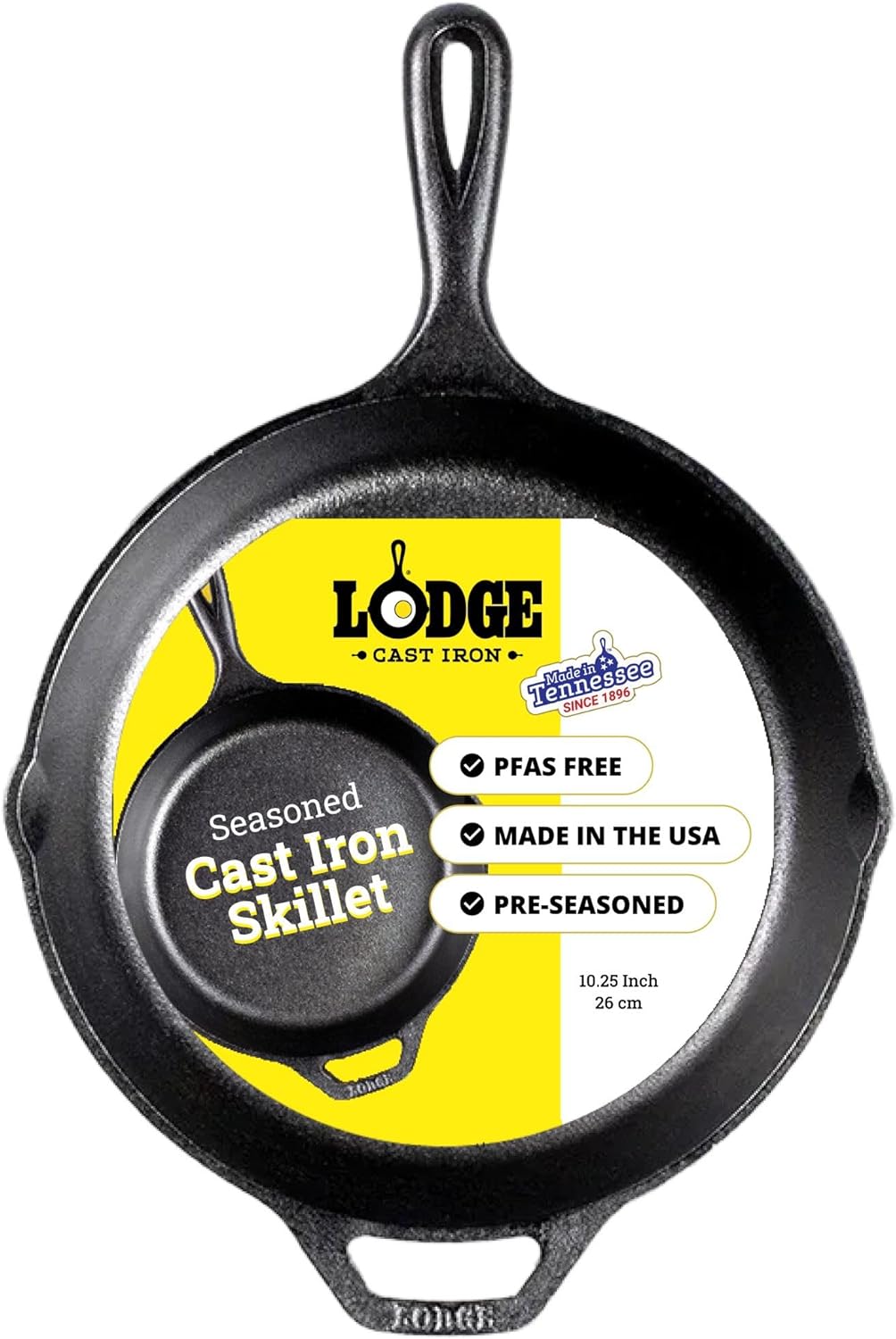
The Budget Route: Sanding a Lodge 10.25-Inch
I took my existing Lodge and spent about fifteen minutes with 80-grit sandpaper on the bottom, followed by a pass with 120-grit to smooth it further. The texture went from rough pebbly casting to something resembling fine concrete. Not smooth like glass, but no more sharp ridges catching.
Cost: $0 (already owned the pan). About $5 if you need to buy sandpaper.
What worked: The scratching stopped immediately. Six months later, no new marks on the cooktop. The pan sits flatter now because those uneven casting bumps are gone, giving better contact with the element, more even heating across the base. It's a genuine improvement for zero dollars.
What didn't work as well: The sanded bottom isn't truly smooth. It's more like very fine sandpaper itself. I still can't slide it (nor should you, more on that below), and when I run my hand across the bottom, I can feel a slight grit. It also required re-seasoning the bottom after sanding, which took a few oven cycles to build back up.
The bigger issue: I found myself being paranoid. Every time I placed it on the glass, I'd inspect the bottom first. The anxiety never fully went away because I knew the surface wasn't designed for glass. I'd just made it less dangerous.
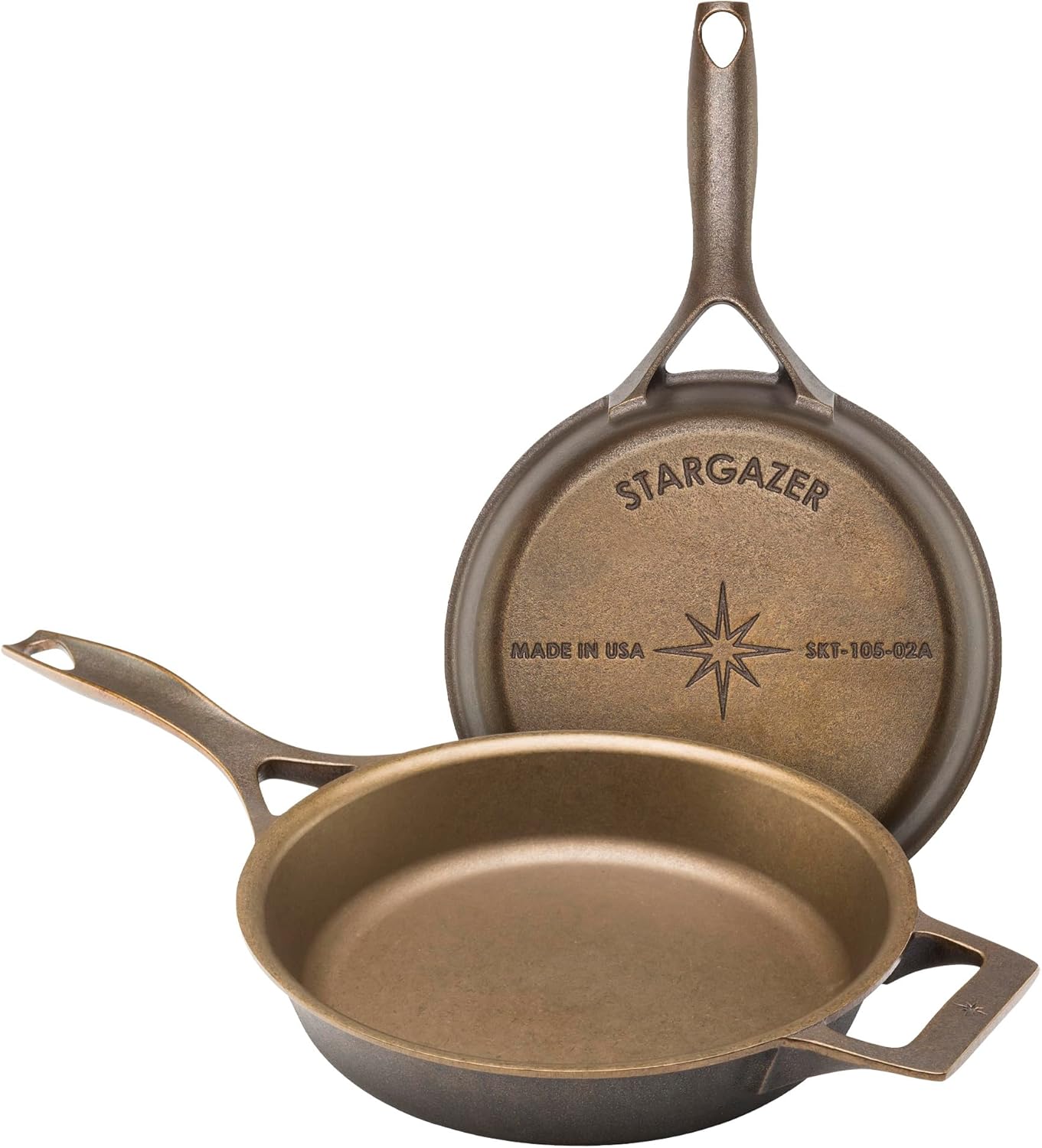
The Premium Route: Stargazer 10.5-Inch Skillet
Three months into the sanded-Lodge experiment, I bought a Stargazer 10.5-Inch Cast Iron Skillet. It ran me about $150. The selling point: a machined cooking surface AND a smooth bottom. The entire pan is polished smooth after casting.
What worked: The difference in the bottom surface is immediately obvious. Where my sanded Lodge feels like fine sandpaper, the Stargazer bottom feels like a ceramic plate. Genuinely smooth. I placed it on the glass and felt zero anxiety because it was designed for this. Six months of regular use, not a single mark.
It's also lighter (about 5.5 lbs with thinner walls), and the longer handle gives better leverage for careful placement on glass.
The cooking surface is better too. Food releases more easily from the machined-smooth interior. Seasoning bonds faster and more evenly. This isn't just a "safe for glass" upgrade. It's a better skillet overall.
What didn't work: The price. $135 for a single skillet is a real ask. And for the first two weeks, old habits die hard. I was still paranoid until I retrained myself to trust the smooth bottom.
The Verdict After Six Months
Both approaches work. Neither scratched my glass after the initial incident. But they're different experiences:
The sanded Lodge is "good enough" with effort. You need to sand it properly, re-season the bottom, and maintain awareness every time you cook. It's the right call if you already own a Lodge and don't want to spend $135. The pan works. The experience just comes with a low-grade vigilance that never fully disappears.
The Stargazer removes the mental load. After the first few weeks, I stopped thinking about it entirely. I just cook. The smooth bottom, the lighter weight, the better handle. It all adds up to a pan I trust on glass without conscious effort. That peace of mind turned out to be worth more to me than I expected.
If I were starting fresh with a glass top stove today, I'd go straight to the Stargazer and skip the DIY phase. But if money is tight, sanding a Lodge works. Just be thorough and commit to the lift-don't-slide rule permanently.
What Actually Scratches Glass (and How to Prevent It)
The scratching conversation online is full of fear but short on specifics. Here are the actual causes I identified after six months:
Carbon buildup on the bottom is worse than casting texture. Carbonized food and grease create sharp, uneven deposits over time. Flip your pan and inspect. A bench scraper clears it in minutes.
The slide reflex from gas cooking. On glass, every slide is a scratch risk regardless of how smooth your pan is. Always lift with two hands. This single behavioral change matters more than which pan you own.
Thermal shock is the hidden danger. A cast iron skillet heated to 500°F set on a cold section of glass can crack the cooktop. Always preheat slowly (medium heat, 3-4 minutes) and never move a hot pan to a cold burner.
Weight distribution. Always center the pan on the element, place it down flat (not edge-first), and use both hands. A 10-inch skillet is safer than 12-inch because it's lighter to control.
Quick Reference: What to Look For
Shopping for glass top compatibility? Four things matter: flat smooth bottom (run your fingernail across it, and if it catches, it'll catch on glass), under 6 pounds (lighter = less damage risk), long handle for controlled placement, and 10-inch size over 12-inch (easier to center, lighter to control). The Stargazer hits all four.
The Products
My daily driver on glass: Stargazer 10.5-Inch Cast Iron Skillet, around $150. Machined smooth bottom, lighter build, excellent handle. No scratches after 6 months.
The budget approach: Lodge L8SK3 10.25-Inch Pre-Seasoned Skillet, ~$22. Sand the bottom with 80-grit then 120-grit, re-season, commit to lift-don't-slide. Works but requires ongoing diligence.
If you want to read more about how stainless steel behaves differently on glass (and why food sticks to it), I covered the technique in Why Does Everything Stick to My Stainless Steel Pan?
Questions People Ask
Can you use a cast iron skillet on a glass top stove?
Yes, but you must lift it instead of sliding it. Cast iron is heavy and the rough bottom can scratch glass cooktops. Use a pan with a machined smooth bottom, or sand the bottom of a standard Lodge with 80-grit then 120-grit sandpaper. Always center the pan on the element and place it down flat.
What is the best cast iron skillet for glass top stoves?
The Stargazer 10.5-Inch Cast Iron Skillet is the best option for glass top stoves. It has a machined smooth bottom that will not scratch glass, weighs 5.5 pounds, and has a long handle for controlled placement. It costs around $150. For a budget option, sand the bottom of a Lodge 10.25-Inch ($22).
Will cast iron crack a glass cooktop?
It can if you drop it or cause thermal shock. A heavy cast iron skillet heated to 500 degrees set on a cold section of glass can crack the cooktop. Always preheat slowly on medium heat for 3 to 4 minutes and never move a very hot pan to a cold burner. Scratching is more common than cracking.
Should you sand the bottom of a Lodge cast iron skillet for glass stoves?
It works. Use 80-grit sandpaper to remove the rough casting texture, then 120-grit to smooth further. Re-season the bottom in the oven afterward. This eliminates scratching for zero cost if you already own the pan. The result is not as smooth as a machined skillet like Stargazer, but it is effective.