For about three months after switching to an electric stove, every stir fry I made came out wrong. Limp vegetables, pale chicken, sauce pooling at the bottom instead of coating the food. I'd owned a round-bottom wok for years on gas and made great stir fry without thinking about it. Same wok, same recipes, new stove, and suddenly nothing worked.
I blamed the stove at first. Then I blamed the wok. Turns out it was both, plus my technique was wrong for electric in ways I didn't understand until I dug into it. After months of testing, the best wok for an electric stove is the Yosukata 13.5-Inch Carbon Steel Flat-Bottom Wok. But the wok alone isn't the fix. You need smaller batch sizes and longer preheating to compensate for how electric elements recover heat. Here's everything I learned.
Why My Stir Fry Was Failing
The first problem was obvious once I paid attention: my round-bottom wok was barely touching the electric element. On gas, flames wrap around the curve. On a flat coil or glass top, only the very bottom tip makes contact. I was heating maybe a two-inch circle in a fourteen-inch pan. Everything above that circle was lukewarm.
The second problem was less obvious. Even after I bought a flat-bottom wok, the stir fry was still mediocre. Better than before, but still not right. The vegetables still released too much water. The chicken didn't brown.
After more research, I realized the issue was thermal recovery. Gas burners respond instantly. Electric elements are slow. When you dump cold vegetables into a hot wok on electric, the temperature drops and takes 30-45 seconds to climb back up. In that window, your food isn't frying. It's steaming in its own moisture.
The fix wasn't just the right wok. It was the right wok combined with the right technique for electric stoves specifically.
The Technique Fix (This Matters More Than the Wok)
Before I talk about which wok to buy, here's what changed my results overnight:
Preheat 3-4 minutes on medium-high. On gas, a wok is ready in 60 seconds. On electric, you wait. Test: flick water drops in. If they dance and evaporate in two seconds, you're ready.
Cook in smaller batches. On electric, I cook protein first (spread flat, don't move for 45 seconds), remove it, then vegetables in two batches, then combine. Each small batch gets proper searing because you're not overwhelming the element's heat recovery.
Stop stirring constantly. Place food flat against the hot base, leave it 30-45 seconds, then toss. The browning happens during contact time, not movement.
Oil goes in after preheating. Swirl to coat, wait for the first wisp of smoke, then food goes in. Peanut oil or avocado oil work well, anything above 400°F smoke point.
The technique matters more than the wok on electric. I got good results with a mediocre pan once these habits clicked.
The Equipment Fix: What to Look For
Once technique was sorted, the right wok took results from good to excellent. For electric specifically: flat bottom (4-5 inches across for proper element contact), carbon steel at 1.5-2mm thick (thinner warps within months, thicker takes too long to heat), 14-inch diameter (room to batch-cook without overhanging the element), and a long handle for tossing leverage without lifting off the heat.
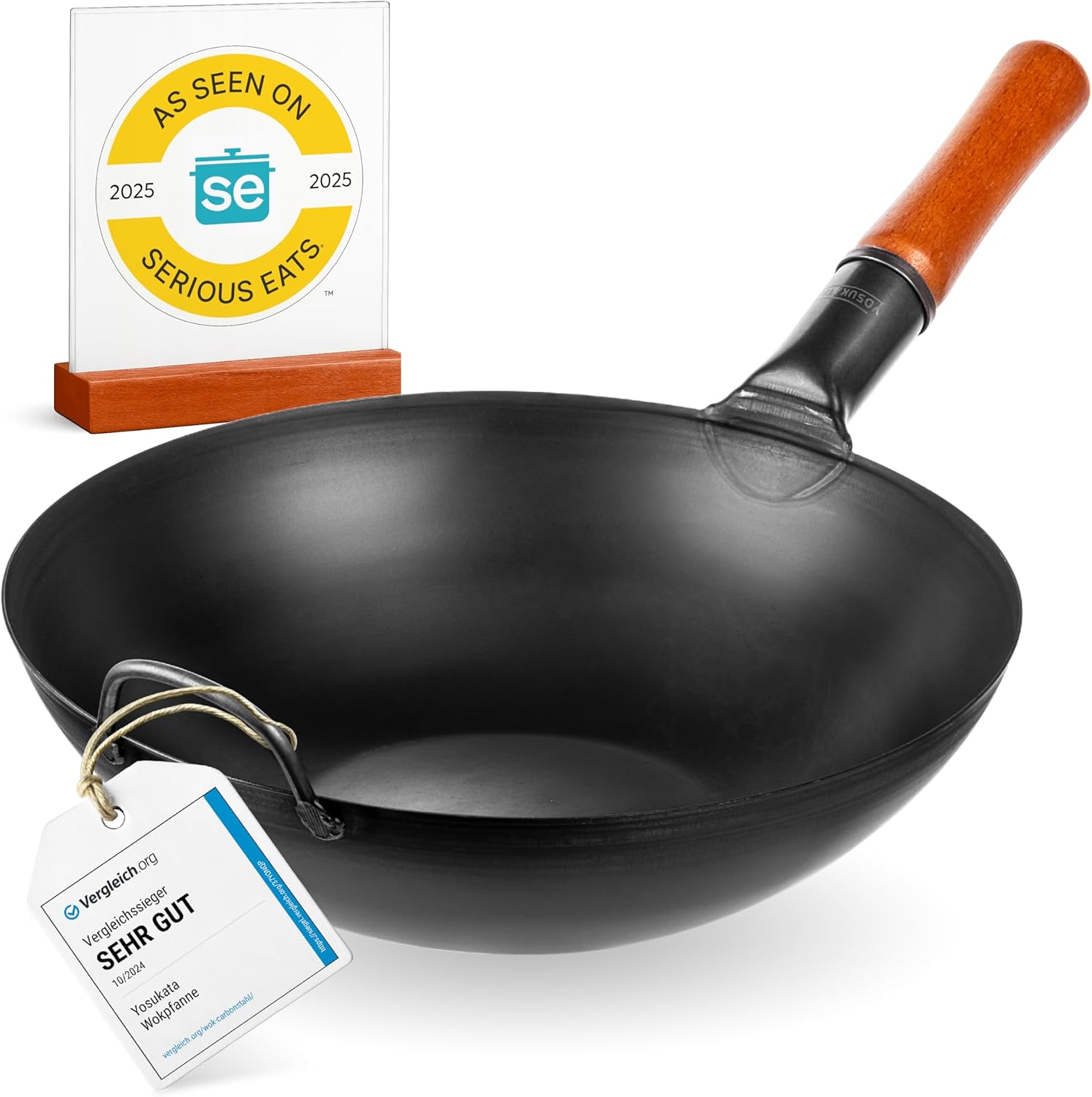
The Wok I Ended Up With
After returning one wok that warped in month two (thin steel, should have known better), I landed on the Yosukata 13.5-Inch Carbon Steel Flat-Bottom Wok. It's been the one I reach for every time for about four months now.
It hits every criterion: flat base sized right for electric elements, pre-seasoned carbon steel at around 2mm thickness (warp-resistant), and a wooden handle that stays cool during long cooking sessions. At about four pounds empty, it's substantial enough to stay stable on glass but light enough to toss with one hand once you build the wrist strength.
The "blue carbon steel" treatment gave the seasoning a head start. I still did two initial stovetop seasoning rounds, but the surface bonded faster than raw carbon steel I've used before. Four months in, eggs slide across the surface without sticking.
The one downside from other owners I've read consistently: it takes noticeably longer to preheat than thinner woks. On electric, where you're already waiting 3-4 minutes, add another minute. Once hot though, it holds temperature better when cold food goes in, which is exactly what electric stoves struggle with.
What it costs: around $60-65. Not the cheapest wok, but the thickness means it won't warp and need replacing in a year like budget options do.
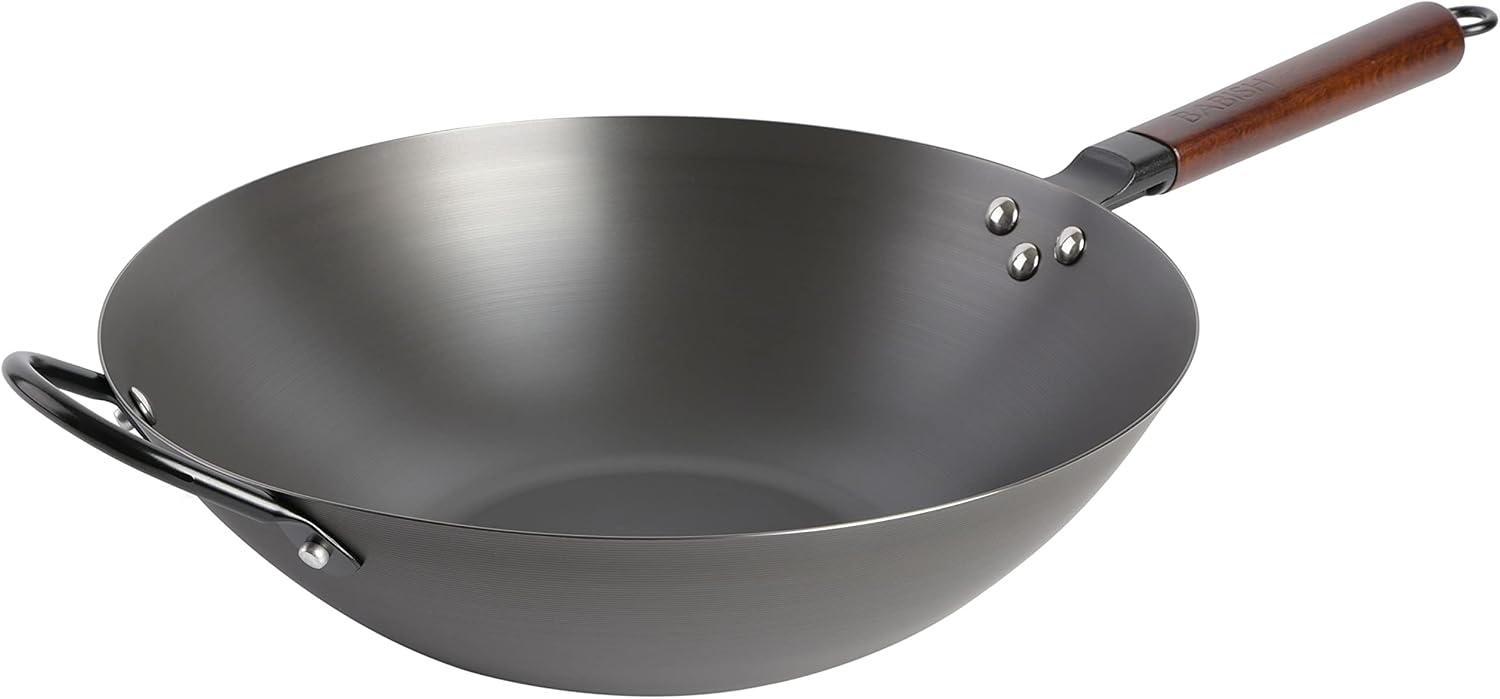
The Budget Option (If You're Not Sure Wok Cooking Is for You Yet)
If you want to try wok cooking on electric without committing $60+, the Babish Carbon Steel 14-Inch Flat-Bottom Wok runs around $50 and is Amazon's "Overall Pick" in the category with over a thousand reviews.
It's slightly thinner than the Yosukata, which means faster heat-up (a plus on electric) but less warp resistance over time. The 14-inch diameter gives you a touch more cooking space. The handle is similar: wooden, stays cool, long enough for leverage.
My take: if you already know you'll wok cook regularly, go straight to the Yosukata and skip the eventual upgrade. If you're experimenting, the Babish gets you in the door at a lower commitment.
What About Glass Top Stoves Specifically?
Everything above applies, plus one rule: never slide the wok. Carbon steel can scratch glass if you drag it. Use a smooth (not hammered) bottom wok, and always lift. I covered glass top specifics in my article on using cast iron on glass top stoves.
The Common Mistakes I See People Making
Based on everything I've read and experienced:
Buying a nonstick-coated wok. The coating can't handle the temperatures needed for proper stir fry (450°F+). It off-gasses, degrades, and you end up with a pan that doesn't sear and needs replacing within a year. Carbon steel is the answer for woks because it gets better with age, not worse.
Using a round-bottom wok with a ring adapter. Those metal rings that hold a round-bottom wok on a flat stove? They add distance between the element and the wok bottom, reducing heat transfer. You're making an already-difficult heat problem worse. Just get a flat-bottom wok.
Preheating on high. On electric, "high" often overshoots. You get one spot that's screaming hot while the rest of the element hasn't caught up. Medium-high for 3-4 minutes gives more even heat distribution across the flat base. Once the wok is uniformly hot, you can bump to high for the actual cooking.
The Short Version
Bad stir fry on electric stoves is a technique problem first, equipment problem second. Fix how you preheat, batch your ingredients, and give food contact time, then pair that with a flat-bottom carbon steel wok in the 1.5-2mm thickness range. The combination is what makes it work.
The Yosukata 13.5-Inch is what I use daily and recommend if you know you'll stick with wok cooking. The Babish 14-Inch is the lower-commitment entry point if you're still experimenting. Both are carbon steel, both are flat-bottom, both work on electric.
Questions People Ask
What is the best wok for an electric stove?
The Yosukata 13.5-Inch Carbon Steel Flat-Bottom Wok is the best pick for electric stoves. It has a flat base sized for electric elements, 2mm thick carbon steel that resists warping, and holds heat well during batch cooking. It costs around $60 to $65. The Babish 14-Inch is a good budget alternative at $50.
Can you use a wok on an electric stove?
Yes, but it must be a flat-bottom wok. Round-bottom woks barely touch electric elements and cannot heat properly. You also need to adjust your technique: preheat for 3 to 4 minutes, cook in smaller batches, and give food 30 to 45 seconds of contact time before tossing.
Why is my stir fry soggy on an electric stove?
Electric elements recover heat slowly. When you add cold food, the temperature drops and takes 30 to 45 seconds to climb back. In that window food steams instead of frying. The fix is cooking in smaller batches, preheating longer, and giving food uninterrupted contact time with the hot surface.
Should I buy a non-stick wok or carbon steel wok?
Carbon steel. Non-stick coatings cannot handle the 450+ degree temperatures needed for proper stir fry. They off-gas, degrade, and need replacing within a year. Carbon steel gets better with age as seasoning builds up, handles extreme heat safely, and lasts decades with basic care.